Med news english

Malta, foreign diplomats reiterated support for Ukraine on its Independence Day

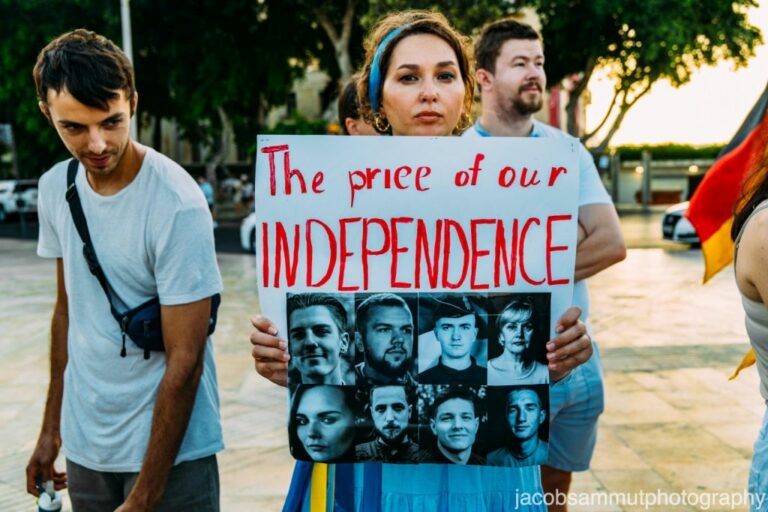
LA VALLETTA (MALTA) (MNA/ITALPRESS) – The Ukrainian community in Malta has marked the 33rd anniversary of Ukraine’s independence by gathering in Valletta. The event was held as part of the global campaign “Stand with Ukraine – Help defend our independence” organised by the Ukrainian World Congress. Several performances featuring singing, dancing and live music took place followed by speeches from diplomatic representatives from the United States of America in Malta, the United Kingdom, France, Japan, Australia and international volunteers. All reiterated their countries’ unwavering support and continued assistance to Ukraine in its defence of the national integrity, sovereignty and independence.
“Today, Independence Day for every Ukrainian stands as a symbol of the great unity of all Ukrainians standing shoulder to shoulder with the people of the whole world in defence of peace, justice, sovereignty and the right to self-determination!” the Ukrainian community said in a statement after the event. “This year, Ukrainian Independence Day simultaneously brings sadness and pride. Sadness for the lost lives of those who were part of the Ukrainian future. And pride for the determination and courage of the Ukrainian people to defend their freedom and future. For the third year in a row now, this holiday is not only Ukrainian anymore…” said Olena Khylko, Policy Director, GLOBSEC Ukraine and Eastern Europe Programme. On 24 August 1991, the Ukrainian blue-yellow flag flew for the first time since 1920 on the flagpole at the Kyiv City Council. On the same day, the Verkhovna Rada of the Ukrainian SSR adopted the Act of Proclamation of Independence of Ukraine. It was confirmed on December 1, 1991, at the All-Ukrainian Referendum.(ITALPRESS).

Foto: Jacob Sammut

Three presidential candidates in Tunisia’s general elections on 6 October

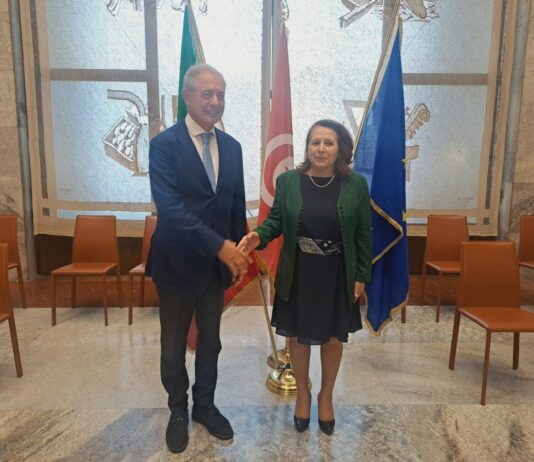
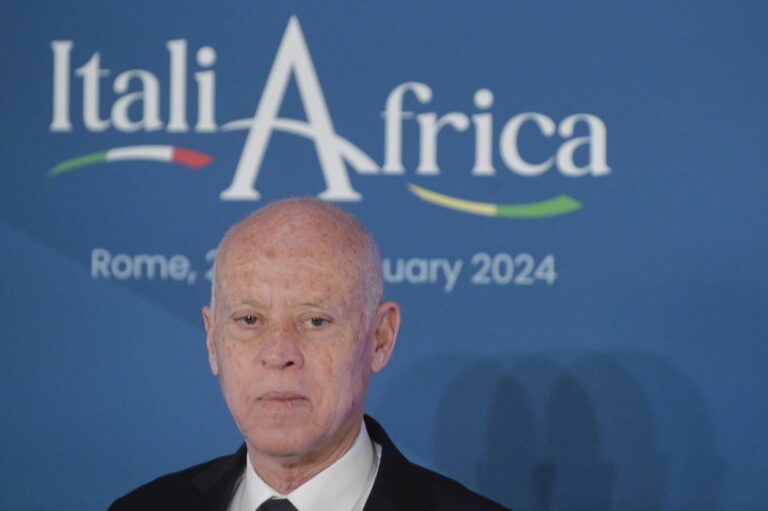
LA VALLETTA (MALTA) (MNA/ITALPRESS) – There will be three presidential candidates in Tunisia’s general elections on 6 October, down from 26 in 2019, in what human rights activists say is President Kais Saied’s onslaught on democracy. They also say it’s a continuation of Saied’s repression during the December 2022 parliamentary elections in which a mere 8.8% of the electorate cast their ballots. The 66-year-old Saied disbanded the government and parliament on 25 July 2021, then drafted a new constitution that gave him almost total power. After bringing charges against, convicting, or imprisoning at least eight of the 14 rejected candidates, he is undoubtedly headed for victory in another contentious election. Bassam Khawaja, deputy Middle East and North Africa director at Human Rights Watch, urged the Tunisian authorities to free democratic space by releasing jailed politicians. “The government should immediately end its political interference in the electoral process, reverse repressive measures, and allow opposition candidates to take part in the ballot,” he said. As it stands, Saied will face off against Zouhair Maghzaoui of the People’s Movement and Ayachi Zammel of the Azimoun Movement. According to the Tunisia Electoral Commission, candidates were disqualified for failing to meet nationality requirements, or for lacking the necessary financial guarantees, or endorsement signatures. Last year, Tunisia banned civil society as Saied continued with a crackdown on free speech in the birthplace of the Arab Spring. The international community is accused of turning a blind eye to developments in Tunisia, once a beacon of democratic hope in the Arabic part of the world. “The international community should no longer remain silent and should urge the government to rectify an already tainted electoral process,” Khawaja said. Saied, a law professor, entered the 2019 election as an independent candidate with a promise to tackle corruption and reform electoral laws. (ITALPRESS).

Foto: Agenzia Fotogramma

Malta, deadlier consequences predicted due to rising temperatures

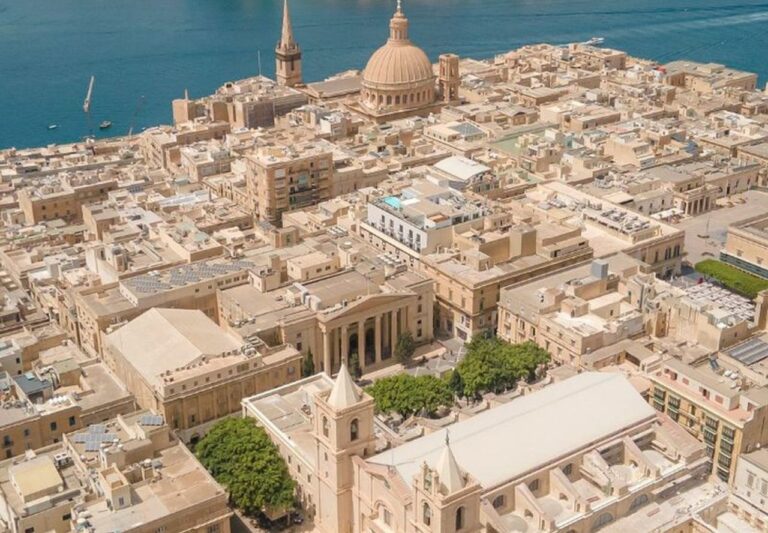
LA VALLETTA (MALTA) (ITALPRESS/MNA) – Malta would suffer most than any other European country due to rising temperatures. A study published in the medical journal Lancet predicts deadlier consequences for the Maltese population as a result of climate warming. The study predicts changes in mortality rates across 1,300 regions and 854 cities in Europe between now and 2100, as temperatures rise and populations age. It found that with temperatures getting 3°C warmer, Malta would suffer 95 more yearly heat-related deaths per 100,000 people than it currently does – more than any other European country and roughly six times the European average of 15 more heat-related deaths. The study presents scenarios in which temperatures increase in line with Paris climate targets (by 1.5°C and 2°C) and others where temperatures rise in line with current climate policy predictions (by up to as much as 3°C) or where no climate policies are enacted (with temperatures soaring by as much as 4°C). The study estimates that 78 deaths per year in Malta were attributable to heat between 1991 and 2020. But this would triple to 258 deaths yearly with temperatures rising by just 1.5°C and shoot up to over 600 if temperatures get 3°C warmer. A 4°C increase would be even more catastrophic, with the sizzling heat killing over 1,000 people per year in Malta alone. The study also factors the ageing population, longer life expectancy and dropping fertility rates. Meanwhile, southern European countries, including Spain, Italy, Greece and Malta, will bear the brunt of the rising temperatures, with death tolls in these countries expected to be multiple times higher than those in cooler northern states. The study comes as climate scientists predict that 2024 could go down as the hottest year on record, with last month being the second-hottest July ever recorded, just short of temperatures recorded in July 2023. The summer of 2023 will evoke bad memories for many across Europe, including in Malta, where intense heatwaves and lengthy power outages led to 80 excess deaths, many of them linked to heat exhaustion and dehydration, in the 10 days after July 24 alone, according to health superintendent Charmaine Gauci. Meanwhile, wildfires raged across much of southern Europe, destroying villages and rural land across Greece, Croatia and Sicily.

– Photo Ufficio del Turismo di Malta –

(ITALPRESS).

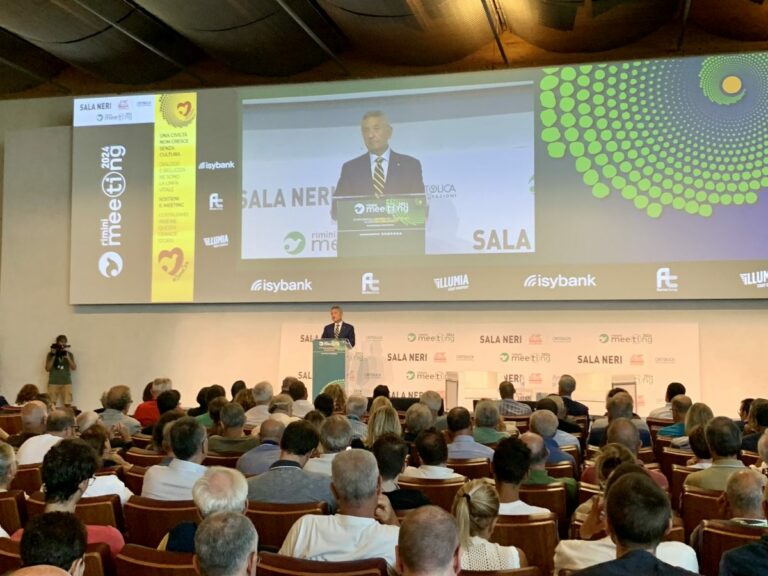
Gentiloni at the Rimini Meeting “EU has given strong response to crises”

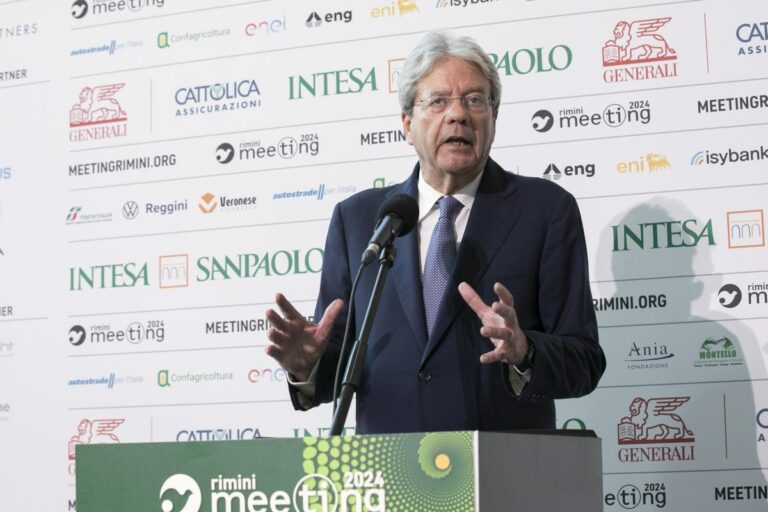
RIMINI (ITALPRESS/MNA) – “Is Europe absent? All in all, it gave a fairly strong response to the four crises – the pandemic, the Russian invasion of Ukraine, the change in the energy model and inflation. The European Commissioner for Economy, Paolo Gentiloni, made this declaration at the Rimini Meeting.?”I’ll give just two examples: the first are these famous Eurobonds, the issue of common European debt. If we spoke with a smile on our faces for about twenty years, sure, it took a pandemic, but we made it.” The second example, added Gentiloni, “is the Russian invasion of Ukraine which saw a European response that was insufficient in terms of diplomatic capacity, but extraordinary in terms of unity between European countries”. Putin “was convinced that he could count on a weak and divided European Union.”?For Gentiloni “betting on Europe and European sovereignty is absolutely not downsizing the role of a country like Italy, on the contrary: I think that true patriots are also true pro-Europeans. We cannot be part-time pro-Europeans”.
“When I hear the Mameli anthem, when I see our athletes winning at the Olympics, when I see a tricolor I am honestly moved and at the same time I think that we need more Europe. The true patriots today are Europeans”, he added.
“The process of making decisions at European level is quite tiring, compromises are necessary. To make a compromise it is necessary to take into account both the different political-cultural inspirations and national interests. It is a great school of democracy and compromise, but in the end decisions are made”, underlined Gentiloni.
All in all, this wonderful experiment by the European Union has worked, let’s not spit on the plate that we have built over these decades because it is a machine of democracy, freedom and peace that works,” he continued.?”Asking member countries to increase their contributions is one of the most unpopular things that the European Union can do: what we should do is gradually put ourselves in a position to have a ‘single treasurè”, explained the European commissioner.?”If we think of moving forward with the European Union of 35 without taking steps towards a European treasure, in my opinion we are deluding ourselves”, he underlined. “If the European Union wants to stay in the changing times it must increase its ambition. More strength for the European Union also means more strength for its capacity to expand democracy and freedom”, added Gentiloni. On the sidelines of the Meeting, the former prime minister responded to questions from journalists who asked him to comment on the statements of the Minister of Economy Giancarlo Giorgetti, according to whom the Stability Pact forces national states into short-term policies. “I think that the new Stability Pact actually has the impetus to work in the medium and long term, in fact we are talking about a multi-year plan of four or even seven years that the various countries must present to the Commission in the coming weeks, he said, adding, “I think it’s a long-term perspective. The collaboration with Minister Giorgetti has always been excellent. We worked together very well, he had an important role in defining the new Stability Pact by representing Italy and supporting it on behalf of Italy.”?For the European Commissioner “Italy has had good levels of growth. We have registered growth more than other countries to keep together the need to push it further and the need to control public debt. If there is one point on which Italy is particularly exposed, it is that of public debt which, after the Greek one, is the highest in the European Union and, unlike the Greek one, has not yet taken the path it should take in the coming years. 10 years would be safe way of gradual reduction”.

– Photo Agenzia Fotogramma –

(ITALPRESS).

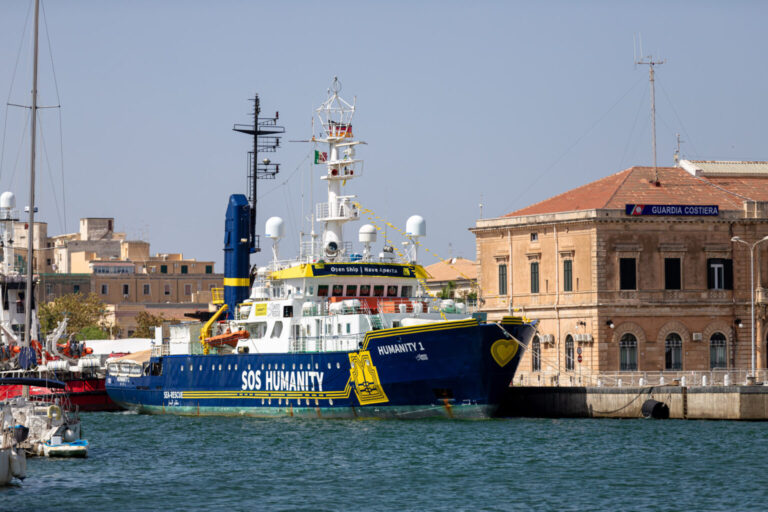
Sos Humanity will open its search and rescue ship to the public

LA VALLETTA (MALTA) (ITALPRESS/MNA) – The organization SOS Humanity will open its search and rescue ship Humanity 1 to the public from 2 to 11 September in the port of Syracuse, Sicily.
The open deck areas will be freely accessible for visitors, supporters and journalists every day from 10am – 6pm. There will be special events such as guided tours and a panel discussion.
In a photo exhibition on board, photographers will show their impressions from rescue operations. All 10 photographers have been part of the crew aboard the Humanity 1 during recent operations and shed light on the search and rescue activities of SOS Humanity in the Central Mediterranean. Their photos were taken between December 2022 and July 2024 and portray different angles and perspectives of a search and rescue mission. Furthermore, guided tours through the exhibition will be offered every day at 3pm, 4pm and 5pm. No registration needed.
On 12 September from 14pm to 16pm a panel discussion open to members of the European Parliament and journalists will be held. SOS Humanity welcomes among others the following speakers on the panel: Sandro Gallinelli, retired Admiral of the Italian Coast Guard; Chiara Denaro, legal expert on migration and Mirka Schàfer, Head of Advocacy and current Human Rights Observer on board Humanity 1. Together, they will discuss the humanitarian and political situation in the central Mediterranean and how to ensure human rights in this contested context.
– photo credit SOS Humanity –
(ITALPRESS).

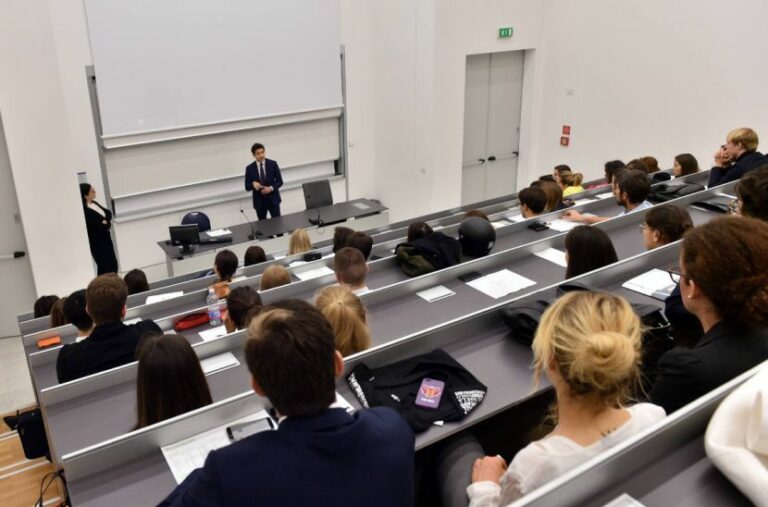
Maltese graduates are the most likely in Europe to find immediate job

LA VALLETTA (MALTA) (ITALPRESS/MNA) – According to data issued by Eurostar, the Maltese graduates are the most likely in Europe to find immediate job, with almost 96% of graduates finding a job within three years of finishing their studies. The employment rate of graduates in Malta has remained high throughout most of this century but had dipped below the 90% mark for the first time in two decades in 2021 and 2022, as graduate employment rates dropped throughout Europe following the outbreak of COVID-19.
But 2023 saw this bounce back to an almost all-time high of 95.8%, well above the European average of 83.5% and just above second-placed the Netherlands. Malta remains the only Mediterranean or Southern European country to register a rate above the EU average. Other Mediterranean states, from Cyprus (80.6%) to Spain (78.7%), France (80.1%) and Greece (72.3%) drag the EU average down, with neighbouring Italy propping up the European table at 67.5%. Just over 96% of graduates with a tertiary education find a job within one to three years of graduation, while this figure drops slightly to 90% for those with a non-tertiary education. Although Malta is succeeding in getting graduates into jobs, it is battling to get students to stay in school in the first place, with a government strategy launched last year hoping to bring Maltàs rate of early school leavers in line with the EU average. Currently, one in ten 18-24 year-olds in Malta are early-school leavers. This remains above the EU median, with the strategy aiming to bring this down to 9% by 2030.
(ITALPRESS).
-Photo credit: Agenzia Fotogramma-

Panetta at the Meeting “EU needs to strengthen integration”

RIMINI (ITALPRESS/MNA) – “The crucial problem remains the reduction of public debt in relation to the product. High debt makes financing for businesses more expensive, slowing down their competitiveness and incentives to invest; exposes the Italian economy to the erratic movements of the financial markets. It takes resources away from counter-cyclical policies, social interventions and measures in favour of development. Italy is the only country in the euro area where public spending on interest on debt is almost equivalent to that on education. I highlight this comparison because it is emblematic of how high debt is weighing on the future of young generations, limiting their opportunities. Addressing the debt issue requires budget policies oriented towards stability and the gradual achievement of adequate primary surpluses”. This was stated by the governor of the Bank of Italy, Fabio Panetta, while he was speaking at the Rimini Meeting.

“Debt reduction will be difficult without accelerating economic development. The right direction is prudence in the management of public finances, accompanied by a decisive increase in productivity and growth. This virtuous circle would significantly increase the chances of success and strengthen the credibility of our policies, and lightens the burden of interest expenditure”, added the governor, while underlining how “the discussion on the” European “rules is not the most important one; we must not reduce the debt because of European rules, but because it is appropriate to do so. Debt is sustainable but if it is so high it leads to inefficiencies and forces us to spend money to deal with past mistakes. Therefore the need to reduce debt is independent of European rules.”

Panetta highlighted the “signs of vitality” for the Italian economy and this progress allow us to look to the future with confidence. “Without indulging in excesses of optimism, we must start to build sustained, lasting and inclusive development. Growth remains the fundamental objective for Italy, but to achieve it we must decisively address the unresolved structural problems.”

He referred to the Recovery and Resilience Plan. “I believe there are the conditions for the RRP to have positive effects on the Italian economy. From 2021 to 2026 it will have an effect of 9% on the GDP due to demand, the potential income will be 4% higher.” He added, “these are estimates subject to high uncertainty. For example the impact will depend on the quality of the reforms, on how much we will strengthen competition, but I believe the conditions exist to have a persistent and potentially permanent effect on the Italian economy. What is important is that the RRP indicates a system where the State intervenes with investments and reforms. If this becomes the way, the effects will be greater”.

Fabio Panetta spoke at length about Europe, recalling how over time European integration “has brought important benefits to citizens. The abolition of internal customs tariffs has favored productive specialization and the creation of economies of scale, stimulating efficiency and competition and increasing employment and enhanced the well-being. It is estimated that in the absence of the single market, the income per capita in Europe today would be one fifth lower.”

He underlined, “to overcome its weaknesses and keep pace with global progress, the European Union will have to initiate profound reforms and make huge investments in the coming years. Among the reforms, I have already underlined the importance of creating a common fiscal capacity, without which the current European governance – characterized by a single monetary policy and fragmented budgetary policies at the national level – remains unbalanced. The idea that the EU can function effectively without centralized fiscal capacity is simply an illusion, and must be overcome. A common fiscal policy would correct this imbalance and strengthen cohesion between member countries, facilitating the realization of large-scale strategic investments. European authorities now have the difficult task of ensuring prosperity for citizens in a less stable and less open world. This goal requires progress in multiple directions. First of all, it is essential to continue the path of integration. A test bed for the new European legislature will have the ability to confirm the use of common spending projects and to advance towards a more complete and more integrated union on both a financial and fiscal level”.

The governor of the Bank of Italy also touched on the topic of the demographic crisis, recalling that in the coming decades “the number of European citizens of working age will decrease and the number of elderly people will increase. This dynamic risks having negative effects on the stability of pension systems, on the healthcare system, on the propensity to undertake and innovate, on the sustainability of public debts. To counter these effects, it is essential to strengthen human capital and increase the employment of young people and women, particularly in countries – including Italy – where the gaps in participation in the labor market by gender and age are still too wide. Measures that encourage an influx of regular foreign workers also constitute a rational response on an economic level, regardless of other considerations. The entry of regular immigrants, he observed, will have to be managed in a coordinated manner within the Union, balancing production needs with social balances and strengthening the integration of foreign citizens into the education system and the labor market”.

Finally, he referred to the European Central Bank policies. “The ECB’s restrictive policy occurred due to the flare-up of inflation. Its intervention prevented this flare-up from becoming persistent, obviously it had some effects: it reduced inflation and slowed down growth, but the end of the restriction has already begun. I believe it is reasonable to expect that we are moving towards a phase of easing of monetary conditions”, concluded Panetta, therefore hoping for a rate cut on interest rates.

The discussion was introduced by Giorgio Vittadini, President of the Foundation for Subsidiarity. For Vittadini “we cannot think of development” if we do not discuss “how to relaunch productivity, the relationship between the product and the people employed. If we are not able to carry out this type of structural intervention, we can enjoy all the contingent interventions, including the RRP, but we must also ask ourselves how to make a leap”.

He stated, “We are in a moment of transition: from the financial economy to another idea of ??economics in which we talk about sustainability and mistakenly think that it is only the issue of climate change”. Instead, for Vittadini, “there is much more”, that is, “the idea of ??putting the human development and a real economy back at the center of economic life”.

– Photo xb1/Italpress –

(ITALPRESS).

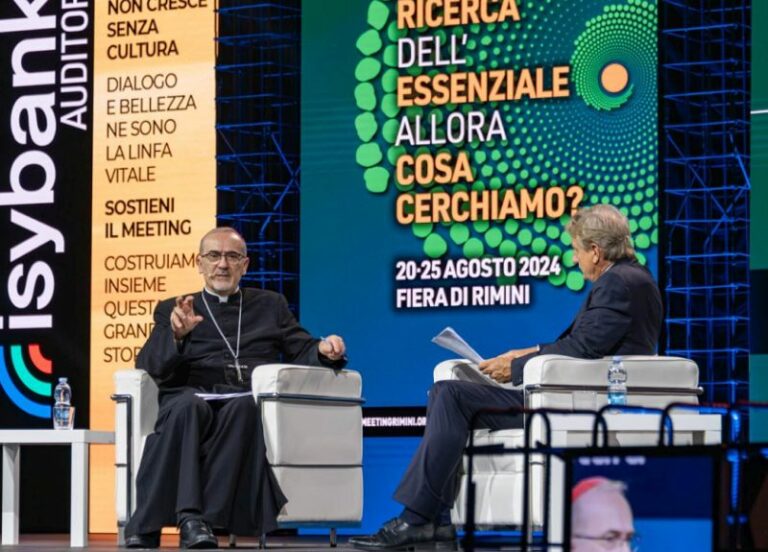
Middle East, Pizzaballa at the Rimini Meeting “Last Train Negotiations”

RIMINI (ITALIA) (ITALPRESS/MNA) – Since 7 October, after the Hamas attack on Israel, the Holy Land has been devastated by a conflict so profound that reconciliation appears like a utopia. This was one of the issues addressed during the inaugural meeting of the 45th Meeting for Friendship between Peoples, in Rimini.
The President of the Meeting Foundation for Friendship among Peoples, Bernhard Scholz discussed the latest developments with Cardinal Pierbattista Pizzaballa, the Latin Patriarch of Jerusalem. “We are in a decisive moment for dialogue. I hope that with the ongoing negotiations we will arrive at something, I have my doubts, but it is the last train” to reach a ceasefire, said Cardinal Pizzaballa. “What is happening in Gaza is something never seen before, it has an impact on feelings that were already there, but have now become common language. There is this inability to recognize each other’s existence and this refusal has become something that is experienced every day. It is something dramatic. The war will end, but rebuilding from hatred and mistrust will require enormous effort,” he added.
“Today inter-religious dialogue is in crisis,” underlined the cardinal. “The representatives of religions find it difficult to talk to each other, at least in a public way.” “At this moment we are unable to meet,” he continued. “Over the years, inter-religious dialogue has produced very important documents, and what has been done so far should not be thrown away, but a lot of work will have to be done, provided that in the future the dialogue should be less elite and look more at real situations and the communities”.
“We need to relate,” he underlined, “and this by accepting each other for who we are. The impression is that we have returned to being islands, but we need to look up and understand that we are not islands”. “Never in the history of our humanity have cultural, social, technological and political changes been as pervasive and accelerated as the changes we are experiencing in this historical moment. But how is it possible to face these changes without naively accessing their fascinating but ambiguous aspects? How is it possible to build peace in the midst of such atrocious and ongoing wars? These questions led us to choose the title of the Meeting”, underlined Scholz as he opened the Meeting, which this year has the theme, “If we are not looking for the essential, then what are we looking for?” We must “rediscover what is essential, what allows us to be free, in solidarity with any authority and power”, he added.
“We hope that peace can be found to silence the weapons, and we hope that diplomacy helps at an international level. However, the fundamental theme remains: how to reconcile peoples; above all we talk about this in the Meeting, that is, creating moments of meeting and reconciliation and hopefully also forgiveness that will allow people to build a different future together. This is the most important part in building peace and we will talk about this at the Meeting”, Scholz explained to Italpress on the sidelines of the first day of the event.
“The challenges are to understand what is changing in the economy, in culture, in politics, in social life, we must then find a way to address the problems that arise. What is the possibility of creating an economy that serves the common good? What are the criteria with which we try to educate our children so that they can face the many issues of the future? What is the possibility of creating a welfare system that serves the good of everyone? Because the essential thing that this Meeting talks about is not a reduction to some necessary remnants, but to take all opportunities we have to create in the future”, he continued.
“The theme of this edition expresses the cultural roots of the Meeting by offering an open look at the extraordinary transformations we are experiencing. We want to search for the essential, just as global flows of information are becoming swollen rivers, while technological sciences show us solutions that were unimaginable until yesterday, while opportunities offered to single people once again suggest the fallacious flattery of the omnipotence of mankind”, said the President of the Republic Sergio Mattarella, in his message to Scholz at the opening of the Meeting. “And yet, faced with so many new opportunities for humanity, we experience first-hand horror, the atrocities and the escalation of wars, the desire for domination, with a dramatic return to the past. Feelings of fear, mistrust, sometimes indifference, not infrequently resentment and hatred, resurface,” continued Mattarella. “For this reason, it is essential to put the person back at the centre. The desire for life and fullness, in the relationship with the community. Because the essential thing does not lie in an isolated, separate, self-sufficient self, but in the encounter with the others, in the discovery of the truths brought by the others, and thus, walking together towards tomorrow that must be conceived and built. The educational and cultural commitment, of which the Meeting bears witness, is of great value”, concluded
Mattarella.
(ITALPRESS).

-Photo credit: Press Office Meeting for Friendship among Peoples-