Med news english

Libya, UN allocates $5.3 million to 195,000 Sudanese refugees

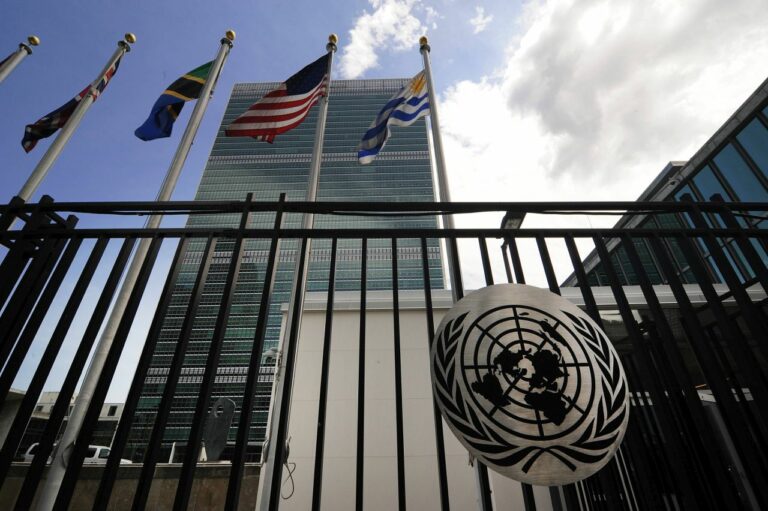
ROMA (ITALPRESS/MNA) – The United Nations allocated $5.3 million from its Central Emergency Response Fund (CERF) to support 195,000 Sudanese refugees living in difficult conditions in Libya. This funding will also provide essential aid to the host communities that accommodate them. This decision comes amidst a growing influx of refugees fleeing the ongoing conflict in Sudan, which has intensified since April. Many Sudanese refugees have made perilous journeys, some even on foot, seeking safety in neighboring Libya. According to the UN, this new funding aims to provide immediate humanitarian assistance to the refugees, including food, medicine, and shelter. It will also support essential services in host communities facing increased pressure. The UN and its humanitarian partners are seeking to raise a total of $1.5 billion to fund this ambitious plan. The UN highlighted that this response plan faces a severe funding shortfall, with only $313 million raised so far, representing a mere 21 percent of the required amount. UN spokesperson Stephane Dujarric emphasized that the ongoing conflict in Sudan has displaced more than one-fifth of the country’s population. The United Nations has called on the international community to show solidarity with the refugees affected by the crisis in Sudan and Libya and to provide the necessary financial support to fund the humanitarian response plan. The organization stressed that this humanitarian crisis requires concerted international efforts to deliver urgent aid and to work towards sustainable political solutions to the conflicts in the region. The Sudanese refugee crisis has escalated dramatically since the outbreak of conflict in April, forcing millions to flee their homes. The fighting, primarily between the Sudanese Armed Forces (SAF) and the Rapid Support Forces (RSF), has caused widespread devastation, disrupting lives and livelihoods across the country. Many refugees have sought refuge in neighboring countries, with Libya emerging as a major destination due to its geographical proximity. However, Libya itself is grappling with internal challenges, including political instability and economic difficulties, making it hard-pressed to accommodate the influx of refugees.

– Photo Agenzia Fotogramma –

(ITALPRESS).
Iraq, San Donato Group to manage new inaugurated hospital

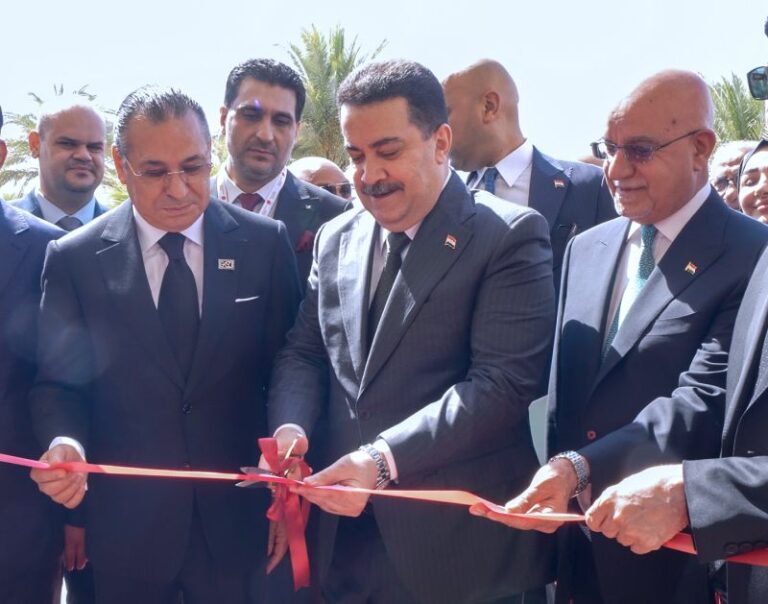
MILAN (ITALPRESS/MNA) – A new hospital that will be managed by the San Donato Group was inaugurated in Najaf, Iraq, in the presence Prime Minister Mohammed Shià Al-Sudani, the Iraqi Minister of Health, Saleh Al-Hasnawi and the Italian Ambassador to Iraq, Maurizio Gregant. The management of the Al-Najaf Al- Ashraf Teaching Hospital was entrusted to the main Italian healthcare group San Donato (GSD), for the next two years by the Iraqi government.
Presiding the official inauguration, Kamel Ghribi, Vice President of the San Donato Group and President of GKSD Investment Holding, accompanied by the Vice President of the Italian Senate Licia Ronzulli and the EU Special Representative for the Gulf region, Luigi Di Maio.
?GSD and GKSD won the contract about a year ago, worth 80 million dollars. It involves the organisational, structural, technological and administrative management of the hospital.
?The Al-Najaf Al-Ashraf Teaching Hospital, is considered one of the most important university hospitals in the city of Najaf, which is about 160 km from the capital Baghdad, with approximately one million two hundred thousand inhabitants, and considered one of the holiest city for the Shia Islam.
The hospital, built by the Germans between 2009 and 2014, has remained underused to date from a clinical and healthcare point of view, thus leading to a rapid deterioration of the infrastructure, the fire safety system and in general of the present technology, accompanied by a lack of operating procedures.
Of the 492 beds, only 60 have actually been used to date. The hospital also has 16 operating theatres, 44 intensive care units, approximately 3,000 medical and administrative employees, now supported by the GSD team, made up of 50 professionals including technicians, administrators and doctors.
?The new GSD management has already allowed, among other things, the return of several specialists who fled the country during the war years ago and returned to make an effective contribution to the restart of the healthcare system in Iraq.
Healthcare is, in fact, one of the priorities of the current government, led by Mohammed Shià Al-Sudani, with the aim of promoting and improving the quality of care for Iraqi citizens, an urgent need to which the strategic partnership between the Iraqi government Iraq, GSD and GKSD aims to cope with renewed commitment.
In particular, the start of the clinical and technological training provided by the GSD to the medical and managerial staff of the hospital, together with the transfer of the skills and technical knowledge of GKSD Engineering & Construction, used for the reconstruction of the hospital structure, brought Iraq closer to Italy, paving the way for future collaborations also in other industrial fields.
“Our people deserve the best care. We may be late in other areas, but we cannot be late in health,” said the Iraqi Prime Minister. The government’s strategic plan for the country’s healthcare also includes the construction of 16 new hospitals, specialized centers for the treatment of the most serious and widespread pathologies. “Our citizens will no longer be forced to go abroad for treatment and will be direct witnesses of an epochal change in the level of quality of care”, concluded the Iraqi Prime Minister, while giving special thanks to the GSD and its Vice President Kamel Ghribi, for having accepted a challenge that he himself considered to be very complex.
Towards the end of the inauguration, Kamel Ghribi, President of GKSD and Vice President of the San Donato Group, declared: “Al-Najaf Al-Ashraf Teaching Hospital is a unique demonstration of how healthcare can break down barriers, create values and build bridges between nations. Working tirelessly behind the scenes, we have overcome obstacles to embrace the bold vision of Prime Minister Mohammed Shià Al-Sudani, demonstrating that, with perseverance and a strong unity, anything is possible.”

– Photo: San Donato Group press office –

(ITALPRESS).

Malta, Former PM’s Head of Secretariat nominated for EU Commissioner

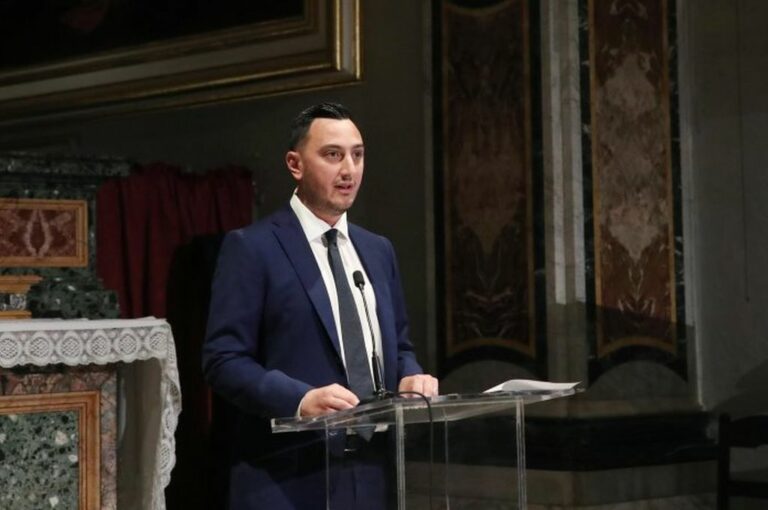
LA VALLETTA (MALTA) (MNA/ITALPRESS) – Maltese Prime Minister Robert Abela nominated Glenn Micallef, his former Head of Secretariat at the Office of the Prime Minister, to be Maltàs next European Commissioner. His nomination comes just days after courts dashed Abelàs hopes to reinstate former Deputy Prime Minister and former Health Minister Chris Fearnès nomination. Fearne resigned following fraud charges and a court ruled he should stand trial for fraud over the privatization process of three state hospitals. It was a long-standing custom that the Maltese government nominates a politician to the role of European Commissioner. According to political observers, the move to nominate Micallef will almost certainly lead to Malta receiving one of the least wanted portfolios within the EU cabinet. Micallef has risen rapidly within government circles, having spent the past years serving as the Prime Minister’s head of secretariat. Micallef was responsible for the day-to-day running of the prime minister’s office. He also represented Malta, together with the Maltese Foreign Minister Ian Borg, in a Ukraine-led peace summit late last year. Before joining the Prime Minister’s office, he served as the director general for Maltàs EU coordination department, a body within the foreign office that is responsible for managing Maltàs position in discussions with EU institutions and making sure European laws and policies are included in Maltàs political system. He is broadly seen to be an expert in EU policy, having also served as Abelàs advisor on EU affairs. All commissioner nominees will face the European parliamentarians for a grilling before they are formally accepted. According to a Politico report, 10 of the EU’s 27 member states have submitted their nomination so far. Four of these – Slovakia, Latvia, Croatia, and the Netherlands – chose to re-confirm their existing Commissioner. Of the remaining six countries, four of them are nominating either current or former ministers, with a fifth, Finland, opting for one of their MEPs. The only non-politician from the bunch is Sloveniàs Tomaž Vesel, a 57-year-old lawyer who spent most of the past decade presiding over the country’s Court of Audit.

– Photo Doi (Dipartimento per l’informazione) –

(ITALPRESS).

Western Sahara, France recognizes Moroccòs sovereignty

RABAT (MOROCCO) (ITALPRESS/MAPNEWS) – In a message to His Majesty King Mohammed VI, may God assist Him, French President, His Excellency Mr. Emmanuel Macron, officially informs the Sovereign that he “considers that the present and future of Western Sahara lie within the framework of Moroccan sovereignty,” the Royal Office said in a statement on Tuesday.
In this message, which coincides with the 25th anniversary of Throne Day, the French President reaffirms “the unwavering position of France on this issue of national security for the Kingdom” and asserts that his country “intends to act in alignment with this position both nationally and internationally”. In this regard, President Emmanuel Macron stresses that “for France, autonomy under Moroccan sovereignty is the framework within which this issue shall be resolved. Our support for the autonomy plan proposed by Morocco in 2007 is clear and unwavering”, adding that this plan “constitutes now the only basis to achieve a just, lasting, and negotiated political solution, in accordance with United Nations Security Council resolutions”. “Today, an increasingly broad international consensus is emerging”, notes the French President regarding the autonomy plan under Moroccan sovereignty, emphasizing that “France fully plays its part in all relevant fora”, particularly through its support for the efforts of the United Nations Secretary-General and his Personal Envoy. “It is time to move forward. I therefore encourage all parties to come together for a political settlement, which is within reach”, President Macron states in his message. Commending Moroccòs efforts to promote the economic and social development of the Moroccan Sahara, the French President committed to ensuring that “France will support Morocco in this endeavor for the benefit of the local populations”. This announcement from the French Republic, permanent member of the UN Security Council, marks an important and significant step in supporting Moroccan sovereignty over the Sahara. It is part of the momentum spurred by His Majesty King Mohammed VI – may God protect Him – and supported by numerous countries worldwide, advocating for Moroccòs territorial integrity and the autonomy plan as the exclusive framework for resolving this regional dispute.
(ITALPRESS).
– Photo credit: Map –

Morocco, water crisis and Gaza at the centre of Mohammed VI’s speech

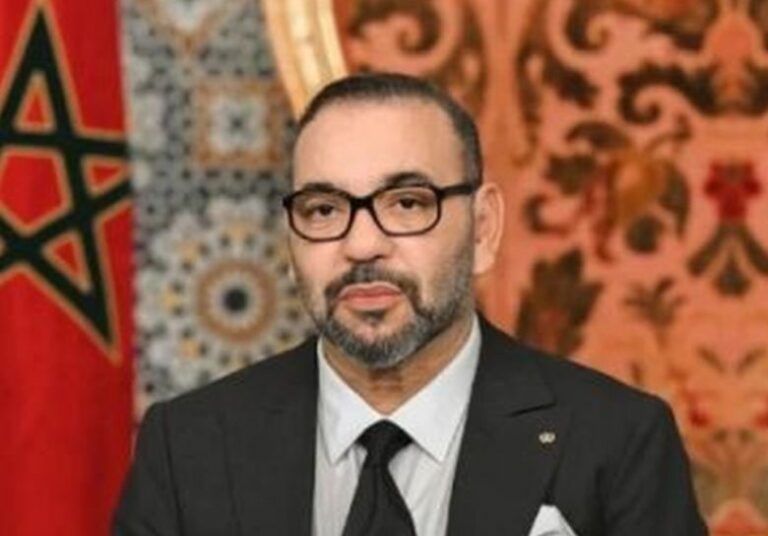
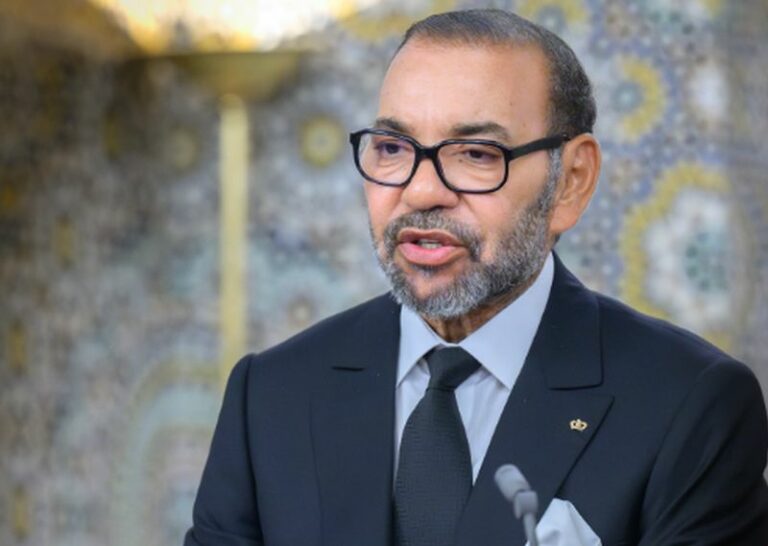
RABAT (MOROCCO) (ITALPRESS/MNA) – The challenges related to water management in Morocco, in light of water stress, and the importance of the Palestinian cause were the central themes of the speech given by the King of Morocco, Mohammed VI, on the occasion of the Feast of the Throne. In his speech to the nation on Monday evening, Mohammed VI underlined the vital importance of continuously updating the national water policy and defining a strategic objective, whatever the circumstances, to address the growing demand for water and its constraints. This strategic objective consists of guaranteeing drinking water for all citizens and covering at least 80% of the irrigation needs of the entire national territory. The king considered it “essential to complete the dam construction program, prioritizing projects planned in regions subject to significant rainfall.” In this context, he appealed to accelerate the implementation of large water transfer projects between hydraulic basins, guaranteeing the connection between the Oued Laou-Larache and Loukous basins and that of the Oued Oum Er-Rbia, passing through the Oued Sebou and Bouregreg Basins. He also called for accelerating the construction of seawater desalination plants, according to the program established to ensure an annual supply of more than 1.7 billion cubic meters. “By 2030, Morocco will be able to cover more than half of its drinking water needs from these stations, irrigate important agricultural areas, and thus strengthen its food security,” specified the king. In his speech Mohammed VI cited the case of the Casablanca desalination plant, the largest project of this type in Africa and the second plant in the world that will be powered 100% by clean energy, underlining that the biggest challenge “remains the construction of the planned stations and related renewable energy projects, within the established timescales and without any delay”.
He also underlined the need to accelerate the completion of the electrical interconnection project which aims to transport renewable energy from the Southern Provinces to the Center and the North, a project which aims to power desalination plants with clean energy. The king called for the development of a national water desalination industry, the creation of training courses for specialized engineers and technicians, and the encouragement to create national enterprises specializing in the construction and maintenance of desalination stations. Referring to the issue of rationalizing the use of water, the king underlined that it is “totally crazy” to spend tens of billions on the mobilization of water resources. In contrast “forms of waste and improper use of water persist”. King Mohammed VI also referred to the Palestinian cause. As chairman of the Al-Quds Committee, he recalled his initiative that led “to the opening of an unprecedented corridor to provide food and urgent medical aid to our brothers in Gaza.” A personal commitment for which the interest of the Kingdom in the internal affairs of our country cannot distract us from the tragedy of the brotherly Palestinian people. With this commitment, the king promised to continue to support “constructive initiatives aimed at finding practical solutions for the ending of a concrete and lasting ceasefire and the recovery of the humanitarian situation”.
For King Mohammed VI, “the worsening situation in the region requires abandoning the crisis management attitude in favor of finding a definitive solution to this conflict”. He added, “if achieving the cessation of hostilities in Gaza is an urgent priority, this must happen in parallel with the opening of a new political horizon to establish a just and lasting peace in the region”, explained Mohammed VI to whom every peace process must be maintained by all extremists and on all sides. He recommended that “the negotiations should serve to relaunch the peace process between the Palestinian and Israeli parties while blocking the path to extremists on all sides”. King Mohammed VI also recalled Moroccòs position for the solution of two states living side by side in security and stability.
(ITALPRESS).
– Photo credit: Map –

Malta, sea surface temperatures that have risen above average

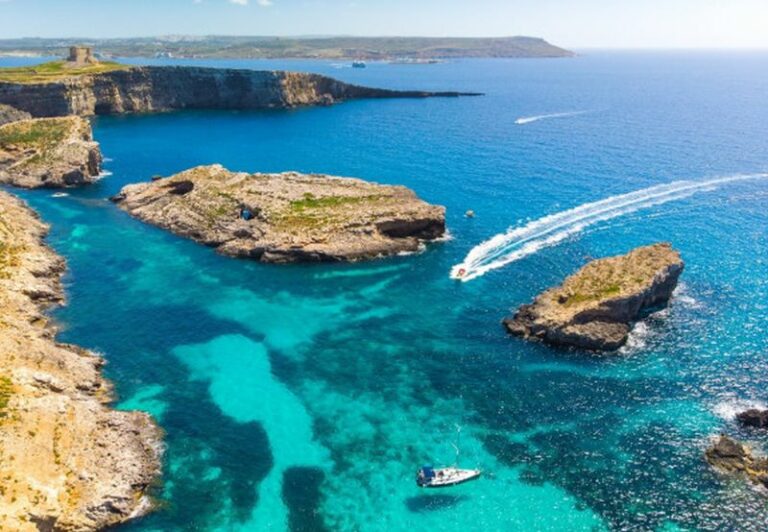
LA VALLETTA (MALTA) (ITALPRESS/MNA) – The sea around Malta and Gozo is experiencing a significant marine heatwave with surface temperatures reaching up to 30°C in some areas. According to the Oceanography Marine Research Group of the University of Malta, the average temperature in the first 10m around the Maltese islands ranged between 28°C and 29°C. This is approximately 2°C above the usual average between 15 July and 21 July. These temperatures typically occur later in the year, indicating a shift in seasonal patterns. But this marine heatwave is not isolated to Malta; it has affected the entire central Mediterranean region as evidenced by satellite data and measurements from a buoy installed near Maltàs coast.
A marine heatwave is defined as a period during which the sea temperature is abnormally warm for the time of the year relative to historical temperatures, with that extreme warmth persisting for at least five consecutive days. The implications of this marine heatwave are severe. Warmer waters can significantly alter marine habitats, leading to potential biodiversity loss as marine species leave the warm waters and relocate to cooler waters. According to the Oceanography Marine Research Group of the University of Malta, the rise in temperatures also increases the risk of harmful algal blooms, which can be toxic to marine life and, eventually, humans. These algal blooms were visible over the past couple of weeks in several bays around Malta with the sea turning green. According to marine researcher Adam Gauci from the Oceanography Marine Research Group of the University of Malta who is participating in a study “MedSeaRise project” to determine the long-term impacts of climate change on the Mediterranean region, if current carbon emission levels persist, projections indicate a temperature rise of 4°C and a sea level increase of about 10m over the next century. “It is much more significant than it appears, especially considering the number of coastal communities we have. Additionally, there is a risk that precipitation could decrease by as much as half, resulting in significantly less rainfall,” he noted. The Oceanography Research Group at the University of Malta is closely monitoring the situation, collecting real-time data and analysing it with the help of numerical models. They provide essential marine data services for research and climatological analysis.
(ITALPRESS).
– Photo credit: Malta Tourism Authority –

Ambassador Balla “Morocco has a clear vision of progress”

ROME (ITALY) (ITALPRESS/MNA) – Challenges already won and to be won, relations between Africa and Italy, the role in the Mediterranean, and continental diplomacy were all aspects on which Youssef Balla, ambassador of Morocco to Italy, focused during an interview with Italpress. It was an opportunity to talk about the growth of the country in the last 25 years, on the eve of the Feast of the Throne: in this sense, the changes in progress have been quite a few and the growth prospects are different. Ballàs reflection started precisely from the fact that “the Feast of the Throne is an opportunity to consolidate the mutually beneficial relationship between the monarchy and the people, and the unity of the country. It is also essential to reflect together on recent events and the future. If I have to take stock of these 25 years I would like to focus on harmony and resilience: the king managed to consolidate solidarity between all the components of the Moroccan society, also through courageous initiatives and in the face of challenges such as Covid or the earthquake that hit Marrakech have shown how we have confronted them”.
The ambassador then focused on the excellent results achieved by Morocco in various sectors: “The economy improves year by year and we have created numerous world-class infrastructures. We have the only high-speed train on the continent and Tangier is the first African port in the Mediterranean. Plus we have 2,500 km of highways and next year, the port of Dakhla, on the Atlantic, will be ready to unite America and Africa. On an economic level, we have managed to triple the GDP and double the product per capita in the last 25 years, without forgetting that our automotive industry is in the top 15 globally with 700 thousand vehicles produced every year, while in 1999 there were 90 thousand. Aeronautics is also important in Morocco, with 140 companies present, as is the production of renewable energy. We are the seventh country in the world: there is a clear vision in the direction of progress”.
As for the Mediterranean, Balla defines it as “a central axis on both a diplomatic and economic level: the port of Tangier welcomes 9 million containers, but in general Africa is growing and there are more opportunities than in the past. We are the second country on a continental level in terms of cooperation and development. One of our objectives is to bring the Sahel countries out of isolation to make them grow economically, especially in accessing the Atlantic. The Nigeria-Morocco gas pipeline is another important project, because it extends for 6,000 km in eleven different countries, bringing energy and gas to Europe”. More specifically, the ambassador explained how at a diplomatic level “we interact with global challenges at moderate terms. Our leadership in Africa and the Mediterranean is indisputable, furthermore, on the immigration front, we have made great initiatives towards stability and peace, hosting major events on the issue and promoting an asylum policy. These people, around 50 thousand from the sub-Saharan area, need education, health services, and work. It was also essential to provide them with a humanitarian and supportive policy to give them back the dignity they deserve”.
Another front on which activity is constant, says Balla, is the “fight against terrorism and radicalization. Our policy combines security and pedagogy to deradicalize people and this experience has been welcomed by many European countries. We are also present to fight other challenges such as climate change, hosting Cop-16, and building the largest solar power plant in the world. We respect the agreements with the international community and produce 42% of electricity thanks to renewables, with the possibility of reaching 52% in 2030”. On the front of diplomatic relations with Italy, which in 2025 will reach two centuries since their inception, the ambassador highlighted how “it will be an opportunity to further consolidate this bond, which is already excellent. There is a convergence on many issues that affect Africa and the Mediterranean and commercial and tourism relationships are growing. Our community in Italy is active, dynamic, and well-integrated. We are the first community in terms of creating businesses”.
On Algeriàs controversy regarding the recognition of the territories of Western Sahara, Balla explained that “Moroccan diplomacy is not used to reacting to useless controversies or collective hysteria. The dynamics of recognition of Moroccòs sovereignty over the Sahara is fast and composed. 110 UN countries recognize the initiative we presented in 2007 and ours is an agreeable position. We hope that Algeria will also follow this constructive approach because the security and stability of the territory is at stake”.
(ITALPRESS).
– Photo credit: Italpress –

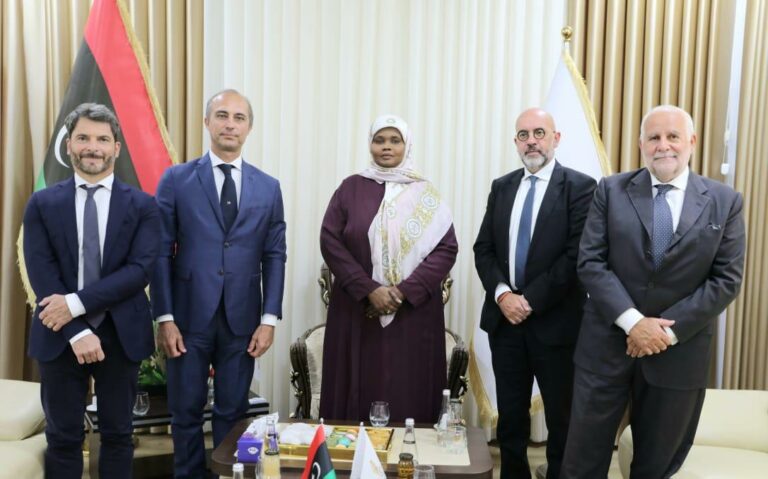
Libya, Cultura Italiae mission to assist in UNESCO recognition

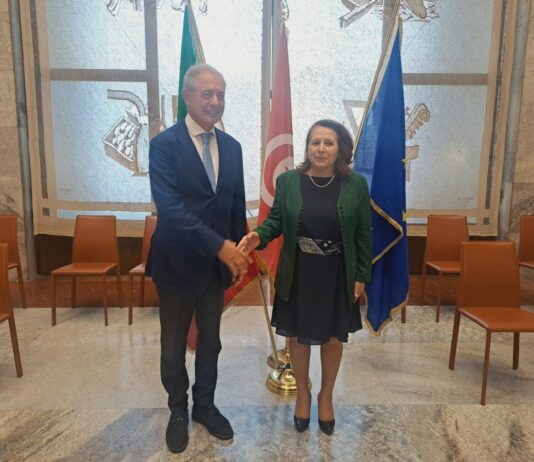
ROME (ITALPRESS/MNA) – “Siamo molto grati all’Ambasciatore d’Italia a Tripoli Gianluca Alberini, all’Addetto Culturale dell’Ambasciata Marcello Matera e al Presidente della Camera di Commercio Italo Libica Nicola Colicchi per il successo della prima missione di Cultura Italiae quale ONG Unesco e per la serie di importanti e proficui incontri avuti a Tripoli, in particolare con Sua Eccellenza la Ministra della Cultura e della Conoscenza Libica Mabruka Toghi Othman con la quale presto firmeremo una serie di protocolli di intesa per attivare vari progetti collaborazione”. Lo dice Angelo Argento, presidente di Cultura Italiae. I progetti su cui il governo libico ha richiesto collaborazione sono di particolare rilevanza, in particolare quelli relativi alla richiesta di assistenza nell’elaborazione dei dossier di candidatura per il riconoscimento Unesco del patrimonio materiale e immateriale libico e per la definizione del piano strategico per il rilancio del turismo e il sostegno alle imprese creative e culturali, con particolare riferimento a quelle artigiane, artistiche e della moda. Altro importante capitolo quello relativo al rilancio del sistema do accoglienza e di realizzazione audiovisiva. Altro incontro importante è stato quello con il presidente del Dipartimento Nazionale di Archeologia presso il Castello Rossi di Tripoli con il quale si è affrontato il tema del recupero dei beni archeologici, in particolare dei 5 siti Unesco, alcuni colpiti dalla recente guerra della loro fruizione e valorizzazione.
“La Libia è un paese giovane e vivace in una fase complessa di transizione che ha lanciato un piano nazionale denominato “Tornare a Vivere”. Un paese che dista appena un’ora e mezza da Roma e 20 minuti di volo da Lampedusa. Un paese che va aiutato a uscire dalla crisi e su cui l’Italia deve investire per due ragioni la prima per antica consuetudine e storia di comunanza la seconda perchè se non lo facciamo noi lo farà qualcun altro e quella che oggi è ancora un’opportunità si potrà presto rilevare come un problema a pochi minuti da casa nostra”, conclude Argento.

– Photo Angelo Argento –

(ITALPRESS).