Med news english

SOUTHERN EU LEADERS DISCUSS UNITED POLICY FRONT IN MALTA

0

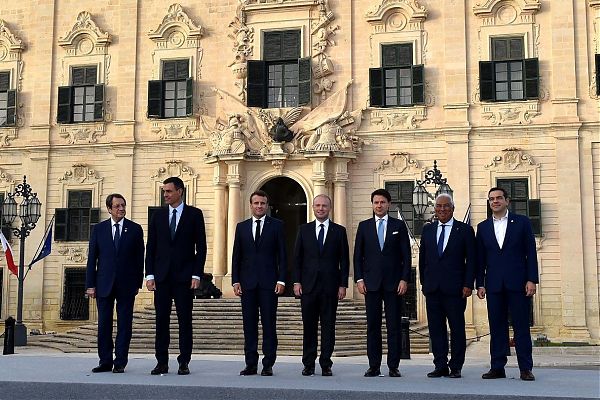
Leaders from the ‘EUMed7’ countries—Cyprus, France, Greece, Italy, Portugal and Spain—were in Malta today for the sixth Southern EU Countries Summit hosted by Maltese Prime Minister Joseph Muscat. The half-day summit included a roundtable discussion on opportunities for the region, plus issues of common concern, from climate change to migration and the EU Budget.

The summit was attended by Emmanuel Macron, President of France; Giuseppe Conte, Prime Minister of Italy; Nicos Anastasiades, President of Cyprus; Alexis Tsipras, Prime Minister of Greece;  António Costa, Prime Minister of Portugal; and Pedro Sánchez, Prime Minister of Spain.

The leaders agreed about the need of more comprehensive approach on the issue of migration; insisting on identifying channels for legal migration, better control of the European Union’s external borders, the need of a new reform and common European asylum system to guarantee a fair burdern sharing as a show of solidarity amongst member states, more efforts to fight the illegal traffickers of migrants, a properly financed common migration policy and a call for all vessels operating in the Mediterranean to respect the international laws.

During a joint press conference in Valletta, Giuseppe Conte, the Italian Prime Minister Giuseppe Conte appealed for more European economic growth, also through public investments instead of securing economic stability through austerity measures. He declared that Italy does not need to take corrective measures. The European Commission is ready to start an excessive deficit procedure against Italy, if  the Italian government does not take the necessary actions. The European Commission found that Italy’s debt stood at more than 132 per cent of GDP in 2018, far above the European Union’s 6o percent limit.

During the first session of the summit, the Prime Minister of Malta said “being an island in the middle of the Mediterranean, and a bridge between Europe and Africa, Malta has always been perfectly placed to act as an interlocutor for debate on regional issues”, while noting the aim was to coordinate ways to work together, recorded in the official declaration signed after the summit.

“The timing of this summit is also crucial”, the Maltese Prime Minister said as he opened the roundtable discussions, stating how those present needed to be part of the decisions being taken about the future of the EU. “The EU is expected to, and should, play a meaningful global role by stimulating stability and growth.”

Quoting the Mediterranean Chapter of the Helsinki Final Act signed in 1975, that ‘there can be no peace and stability in Europe, without security and stability in the Mediterranean’,  Prime Minister Muscat said this remains a priority for the EUMed7 alliance till this day, especially in a less stable world.

“Our work needs to be guided by a set of principles that will shape the future of Europe in the world. Principles which include putting the EU’s social agenda at the forefront of the region’s work, to further promote gender equality and LGBTIQ rights.”

He said economic growth, which leads to more and better jobs, must also be at the centre of the alliance’s policies. “Which is why our region needs to be at the forefront of innovation, a hotbed for the creation, development and roll-out of emerging citizen-centric technologies, designed to enhance socio-economic wellbeing.”

With this in mind, the Prime Minister announced a Summit follow up meeting—the Telecommunications Ministerial Conference—which will be held in Malta next year.

However, Prime Minister Muscat added that no amount of economic prosperity can be lasting without tackling the effects of accelerating climate change in the Mediterranean region. “We need to ensure we intensify our work on the EU’s climate strategy, mindful of regional specificities, to implement the objectives we all agreed to in the Paris Agreement.”

He said energy security is also a priority. “We need a well-connected Mediterranean region as a precondition for a fully functioning energy market aimed at sustainability, affordability, and security of supply.”

As is regional stability, with an unstable Libya being a direct threat. “Our call for ceasefire and the engagement with the United Nations to ensure a full and comprehensive cessation of hostilities is a first step in the long process of rebuilding Libya.” He also commended the work of the Libyan Coast Guard, who had been effective in their work.

Stability in the rest of Africa is also crucial when it comes to migration issues. “Our geographical location makes us susceptible to persistent migratory pressures. Progress has been made only through the goodwill of a number of states willing to share the responsibility of this phenomenon.”

However, he added, “we need to look at a more permanent mechanism within the context of a fully functioning migration policy, based on a balance of responsibility and solidarity. Crucial in this regard is the need to ensure that all vessels operating in the Mediterranean respect the applicable international law.”

After signing the declaration, the leaders addressed the press before going to dinner to continue discussions privately.

(ITALPRES/MNA)
MICHELIN’S STRATEGY FOR AFRICA

0

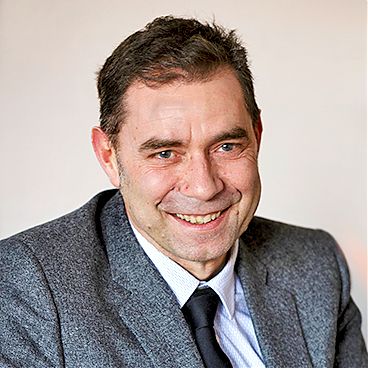
In a recent encounter with the press, Serge Lafon, executive vice-president for Africa, India, Middle East, China, Eastern Asia and Australia of Michelin, explained the approach that the company has adopted for the African continent.

With regards to Africa, Lafon mentioned that “segments are expanding fast so even our activity will increase, also through M&A activities. In the B2B we are developing solutions ourselves. If Europe is our home, Asia is the growing market and on top of that there is a strong industry network. In Africa, which in our structure is together with the Middle East, we have a development strategy based on clusters. One will include Morocco and Algeria. That portion of Africa is expanding in terms of infrastructure and industry and we will tackle that market. IN Eastern Africa, mainly Kenya and Tanzania, we will support the infrastructural and agricultural part. The biggest challenge in Africa is political stability, which is not granted, as well as safety. Of course, business also helps stability”.


With reference to the EU new Marshall plan for Africa to generate green investment in Africa, Borrut said that Michelin will contribute on two main areas. With regards to electric vehicles, it will be in the cities because the battery does not yet ensure long distances, for which Michelin will work on developing  hydrogen-based solutions.

(ITALPRESS/MNA)


MOROCCO, SLOW MOTION OF THE SEVENTH AFRICAN ECONOMY

0

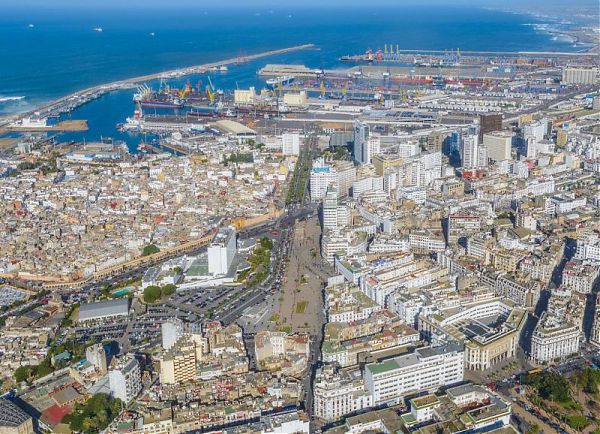
The World Bank has recently issued a list of the main African economies, which sees Morocco receding a position compared to the previous year. In fact, the leadership at the continental level is in Nigeria (with a GDP of 375.7 billion dollars in 2017), followed by: South Africa ($ 349.4 billion), Egypt ($ 235.3 billion), Algeria ($ 170.3 billion), Angola ($ 124.2 billion) and Sudan ($ 117.4 billion). Morocco is ranked seventh among the major economies in Africa, with GDP estimated at $ 109.1 billion in 2017. The High Commissioner for the Plan – Moroccan institution responsible for statistical elaborations and economic planning – has announced that the 2018 will see a slowdown in the economic growth of the North African Kingdom. Ahmed Lahlimi Alami, head of HCP, has in fact declared that GDP should increase this year by + 3.1%, registering a decrease of one percentage point compared to 2017 (+ 4.1%). During a press conference, the High Commissioner also stated that inflation estimates for 2018 (+ 1.7%) are appreciably higher than the consumer price dynamics recorded last year (+ 0, 8%). The trade deficit (from 17.9% in 2017 to 18.5% of GDP in 2018) and the government deficit (from 3.4% in 2017 to 3.9% in 2018) are also expected to deteriorate slightly. The total debt ratio will increase slightly (from 82% in 2017 to 82.6% in 2018), while the public debt (of the Treasury) will be about 65.7% of GDP in 2018. According to Ahmed Lahlimi Alami, the slowdown in Moroccan economic growth will lead to a slight worsening in the unemployment rate, which would rise from 10.2% in 2017 to 10.4% this year.

(ITALPRESS/MNA).

JORDAN, NEW BUSINESS INCUBATOR IN AQABA

0

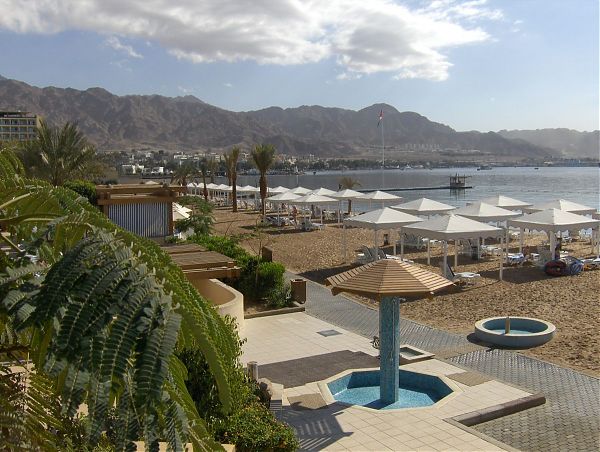
The new business incubator in Aqaba called iPark, has completed its first bootcamp and business plan, for the formation of 19 start-ups. The subjects dealt with were market penetration, innovation for financial planning and attracting investments. 

The training course was funded by the European Union as part of the “Jordanian Action for the Development of Enterprises” (JADE) project. The activity was born with the efforts of JADE in collaboration with iPark and other important Jordanian incubators to provide further support to companies in Jordan to improve their market links, capacity building and increase their growth and export capabilities.

(ITALPRESS/MNA).

LEBANON, WORLD BANK NOT WORRIED ABOUT ECONOMY

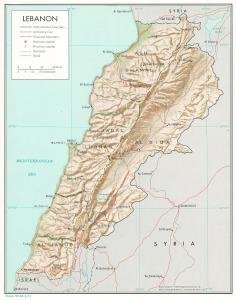
 World Bank is not too alarmed about the Lebanese economy despite its delicate situation and the World Bank official is in Lebanon to assess the economic situation with Lebanese officials.

The World Bank has provided Lebanon with grants to develop the country’s infrastructure, through the  CEDRE conference, held in Paris in April, and that aimed to support Lebanon’s economy and encourage investment. The international community and organizations such as the World Bank have been pressing the Lebanese government to implement badly needed reforms as a prior condition to benefit from billions of dollars of grants and loans.

It resulted in an $11 billion aid package on behalf of Lebanon while Lebanon committed to a series of reforms. The government had already enacted critical political reforms, such as updating the electoral law, which will be accompanied by economic reforms, including initiatives aimed at activating the productive sector. Another step that Lebanon has taken is the passage of two state budgets in less than a year, after 12 years went by without a state budget.
(ITALPRESS/MNA)

MALTA, MASSIMO SARTI NEW IIC DIRECTOR

Massimo Sarti, the new director of the Italian Institute of Culture in Valletta, has settled in Malta. The new director – officially appointed on July 23rd was born in Florence where he graduated from the University in 1987 with a thesis in contemporary Italian literature. From 1989 to 1998, he was a professor of literature and history in state high schools in Tuscany and Lombardy. From 1998 to 2001 he worked as Lector of Italian sent by the Ministry of Foreign Affairs at the Ritsumeikan University of Kyoto and Jagelloniska of Krakow.
Since 2001 he has joined the Cultural Promotion Area of the Ministry of Foreign Affairs and International Cooperation. During periods of service at the Farnesina, from 2001 to 2004 and in 2015, he worked in particular on the promotion of Italian cinema, scholarships and the internationalization of the university system.
Before taking up the management of the Italian Institute of Culture in Valletta, Sarti served in Israel from 2016 to 2018 as Director of the IIC in Tel Aviv. Previously, he was Assistant and Interim Director of the IICs of Tokyo (from 2005 to 2008) and of Los Angeles (from 2008 to 2014). He is married to Gloria Novi and has two children, Piero (17 year old) and Margherita Yuki (12).
One of the main objectives that the new director aims at this initial phase of his establishment is “to establish contacts with institutions, bodies and personalities of the Maltese cultural and scientific world to foster an ever greater knowledge of Italian culture and science in the Republic of Malta”.
For this reason, the Italian Cultural Institute “will continue to plan and organize cultural initiatives in collaboration with the Maltese institutions, to be held both in the prestigious location of Piazza San Giorgio in Valletta, and in local academic, museum and performance spaces”.
“Particular attention – ensures Sarti – will be aimed at promoting the image of contemporary Italy, along with the more consolidated tradition, with programmatic choices in line with the priorities identified by the Ministry of Foreign Affairs and consistent with the cultural strategy of Embassy of Italy. An important part will be dedicated to the promotion of the Italian language in close contact with the institutions and the local school and university system “. The Institute, concludes Sarti, “will obviously continue to be a reference point in providing information on Italian cultural life and in contributing to the orientation of Maltese interested in studying in Italy. It will also provide collaboration to Italian scholars and students in their research and study activities in Malta”.


MALTA: “ITALY HAS NOT FULFILLED COMMITMENTS ABOUT MV LIFELINE”

0

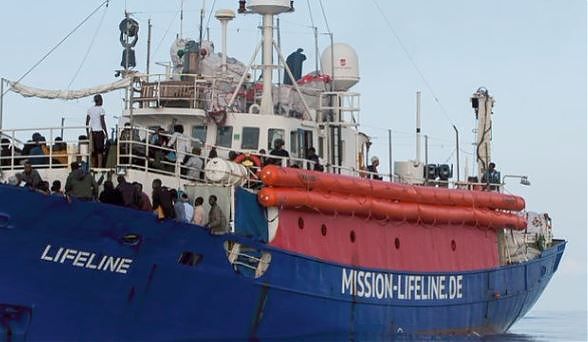
The Government of Malta would like to clarify the hereunder in reply to the Italian Minister of Interior Matteo Salvini who was quoted accusing Malta of not fulfilling its commitments to a previous redistribution mechanism established by the Italian authorities. “The Maltese authorities have already been in contact with the Italian authorities to fulfill their pledged commitments as soon as possible. Nevertheless, the Italian authorities have not provided any tangible procedure for Malta to follow – the Government of Malta writes in a statement -. On the other hand, unfortunately, Italy has not yet fulfilled its commitments on the redistribution mechanism which was initiated by Malta with respect to the immigrants disembarked in Malta on board of the MV Lifeline on the 27th of June, despite the efforts of the Maltese authorities to complete this process with the Italian authorities. Malta always participated in solidarity mechanisms and was the first European Union member state to fulfill its committments with regard to the European Commission’s solidarity mechanism with respect to Italy and Greece. Furthermore, Malta always adheres to international laws and applicable conventions”.

(ITALPRESS/MNA)

ISRAEL, REAL ESTATE SECTOR SLOWS DOWN

0

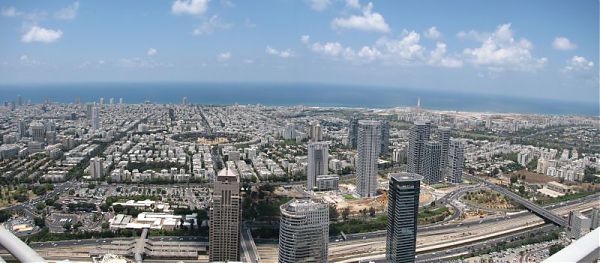
Globes, one of the main Israeli economic daily newspapers reports the news that, according to a survey published in mid-August by the Central Bureau of Statistics at the initiative of the Ministry of construction and housing, the purchases of new homes in second quarter of 2018, amounted to 5,329, down 17%, compared to 6,430 in the second quarter of 2017. As of May 2016, the demand for new homes has fallen by an average of 1.5% per month, from 4,220 homes in May 2016 to 2,890 to June 2018.

Nearly 26% of new homes sold in the second quarter were in the northern district, 17.5% in the district of Tel Aviv, 12% in that of Haifa and 9% in the district of Jerusalem.

8,500 housing units were purchased in Israel only in June 2018, of which 530 as part of the subsidized price plan. The figure was 10% lower than that of June 2017.

A survey of the real estate market published by the Chief Economist of the Ministry of Finance stated that while the volume of business had increased in May, it went down in June to one of the lowest levels for this month in the last decade. The aggregate number of new homes sold between January and June was 9% lower, but this decline was partially offset by the number of apartments sold as part of the revised price plan, which was twice that of the corresponding period last year. Investors bought only 1,100 housing units throughout Israel and in Tel Aviv, only one in four buyers was an investor. A historical minimum, according to the Ministry of Finance, for investors, who in recent years have represented 40% of buyers in the most important economic center of the country.

(ITALPRESS/MNA)