
Med news english

Terna and Steg preside signing EU financing for Italy-Tunisia connection

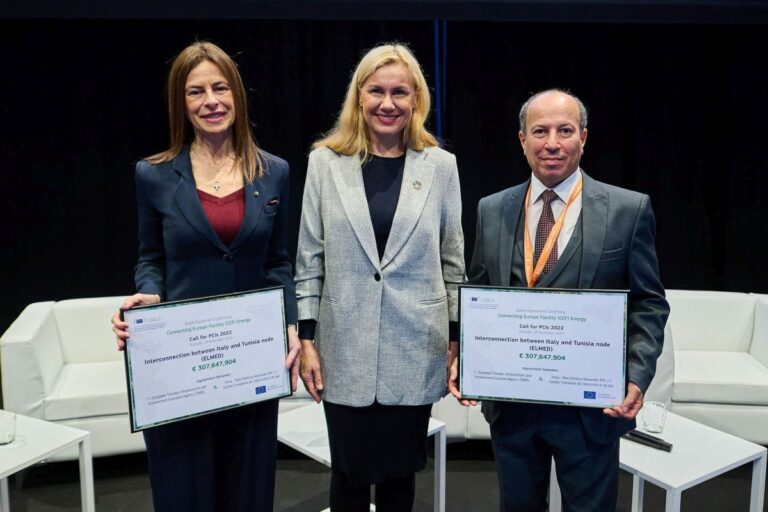
BRUSSELS (BELGIUM) (ITALPRESS/MNA) – The signing ceremony of the Grant Agreement for the Elmed electricity interconnection project that will connect Europe and North Africa took place in Brussels, an agreement concerning a project that will be built by Terna, the company that manages the Italian electricity transmission network, and Steg, the Tunisian electricity and gas company.
Kadri Simson, European Commissioner for Energy, Giuseppina Di Foggia, CEO and General Director of Terna, and Fayçel Tarifa, President and General Director of Steg, signed the agreement, ratified last August, and will financing an allocation of 307 million euros by the European Commission, intended for the submarine connection between Italy and Tunisia.

The funds from the EU funding program “Connecting Europe Facility”, intended for the development of key projects for the strengthening of community energy infrastructure, have been allocated for the first time in history to a project between a Member State and a state outside the EU.

“Elmed, the electricity connection that will unite Italy and Tunisia, is exceptional in many respects. It is the first electricity infrastructure under the Connecting Europe Facility fund to receive funding for projects developed by a Member State and a third country. I want to congratulate the parties involved for demonstrating effective collaboration and I wish the project the best success”, said Kadri Simson. “Today’s agreement confirms Ternàs increasingly central role in contributing to the creation of a safe, reliable and resilient European electricity grid. We will also continue to collaborate with other institutions in the future, making both our unique and distinctive skills available and innovative and digitalised solutions”, declared Giuseppina Di Foggia. She added: “Elmed is a strategic infrastructure for Italy and Europe, one of the main initiatives as part of Ternàs Development Plan, and will contribute to increase and integrate renewable energy between the two continents, allowing the country and the EU to increase the level of energy independence”.

“The financing of 307 million euros, intended for a strategic project like Elmed, confirms the long-standing partnership between the Tunisian Government and the European Union in the energy sector, as well as the importance that this project was agreed to secure energy for the future, that will be sustainable and renewable. We are convinced that Elmed will contribute to achieving the goal of energy transition in Tunisia by 2030 and increasing the country’s energy independence. The interconnection, which will connect the Tunisian electricity grid to the Italian grid through a 600 MW submarine cable, also symbolizes the exceptional level of cooperation between the two continents and, in particular, in the Mediterranean, between Tunisia and Italy, and will open the horizon to numerous other projects in the region, thanks to the support of the European Union institutions”, said Fayçel Tarifa.

The electricity connection of approximately 220 km in length (of which approximately 200 km in submarine cable at a maximum depth of approximately 800 metres), 600 MW of power and a total of 850 million euros of investment will also contribute to the integration of the electricity markets and secure energy supply through the diversification of sources.

Elmed will make it possible to reduce climate-changing emissions, enabling the achievement of the objectives set at national and European level on energy and climate by the National Integrated Plan for Energy and Climate and by the Green New Deal. The PCI Energy Days bring together member countries, regulators, network operators and promoters of Projects of Common Interest – such as Elmed – to share successful experiences and upcoming challenges for the modernization and development of community energy infrastructures.

– Photo press office Terna –

(ITALPRESS).
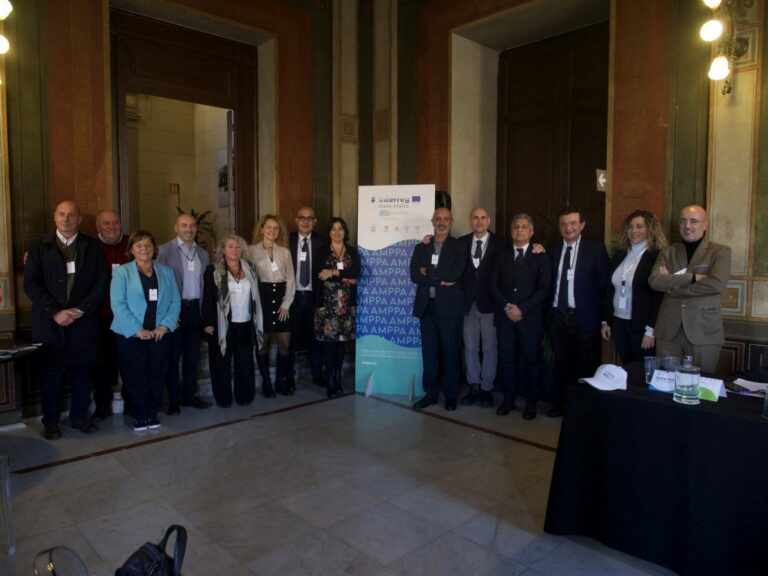
Italy-Malta participate in Marine Protected Areas, AMPPA project ends

PALERMO (ITALPRESS/MNA) – Conservation of marine biodiversity and the value of artisanal fishing were at the center of the strategic work and participation of the local population carried out by the Interreg VA Italy – Malta AMPPA (Marine Protected Areas and Artisanal Fishing). The Project, launched in 2019 and carried out in partnership between Sicilian (Egadi and Ustica MPA and Regional Fisheries Department) and Maltese (the villages of Gharb and Ghajnsielem in Gozo) entities, has reached its final phases and the results were presented at the Giardini del Massimo in Palermo, in the presence of the participants who took part in the project and the authorities of the two countries.
AMPPA supports the need to preserve marine biodiversity with two other objectives: maintaining the productivity of ecosystems and contributing to the economic and social well-being of those who live in the territories involved. The MPA regulation also refers to the compliance to the rules and the dissemination of information campaigns in order to manage fishing activities and safeguard the environmental heritage, as well as the setting up of four environmental information centers (three physical, in Favignana, Ustica and Ghajnsielem, and one virtual).
The local populations have been involved in various steps: first and foremost on the environmental awareness and education campaigns to encourage the development of environmental awareness among the community including locals and tourists, and the operators themselves like the fishermen and businesses operating in the tourism industry within the protected areas.
There were two ways for raising awareness: the first was the establishment of information days (30 were organized during the project) with spaces for debate and the second was the dissemination of communication campaigns on social networks to further broaden the knowledge on AMPPA. Also of great importance were the various workshops and educational courses, aimed at more than a thousand students from different territories (Favignana, Ustica, Marsala, Palermo, Ghajnsielem) in both primary and secondary schools. In addition to children, the project also involved families and a series of training courses for teachers.
“The objectives we set were ambitious”, underlined Salvatore Livreri Console, Director of the Egadi Islands AMP and project leader, adding “the world of fishing has accelerated its transformation in recent decades and the conservation of the sea has also been addressed with more urgency: our mission was to develop a series of good training and experimental practices to reconcile the needs of conservation and artisanal fishing. Involving two countries; Italy and Malta, was ideal for developing common management strategies”.
AMPPA was coordinated by engineer Giovanni Borsellino, who spoke about its development and future prospects: “The project process was very troubled between Covid and other difficulties, but we managed to bring it to completion: the involvement of both the Italian and Maltese Ministry of Agriculture and Fisheries, as well as the entity that manages the MPAs in Malta. We are already initiating contacts with other marine protected areas at European level, to jointly develop cooperation programs that aim to enhance the nature and the environment of the sites”.
Among the partners of the project there was also the Region, supporting the Mediterranean Fisheries Department. Angelo La Pillo underlined how “having raised the importance of this mission makes us focus on the future: the areas under protection will be expanded and we will evolve the current legislation in this sense. Furthermore, helping this development with European funds will be important, but we must not leave anyone behind: greater involvement of fishing companies is needed”.
Davide Bruno, director of the AMP Ustica, highlighted the impact that the dissemination of these practices has had on the territory and the role that the new environmental information center will have: “For the first time in Ustica a collaborative relationship is being developed with the fisheries workers: there is an awareness that the sea does not belong to the State or the European Union, but belongs to them. The environmental information center is the place designated for scientific dissemination through cutting-edge technological tools: training must start with the new generations, to instill in them respect for the environment and sustainable development”.
Kevin Cauchi, mayor of Ghajnsielem, expressed satisfaction for the results achieved and for the awareness raised with the involvement of people of all ages: “Many people didn’t even know about the existence of the marine protected area in our territory, we managed to raise awareness and the importance of environmental protection and traditions linked to the fishing sector among young people, adults and the elderly”.

– Photo AMPPA –

(ITALPRESS).

Imf warns Malta “Phase out the energy subsidies”

LA VALLETTA (MALTA) (ITALPRESS/MNA) – The World Bank said the Maltese government had to start phasing out the energy subsidies, saying price hikes on the global market were no longer temporary.
In its annual review on Malta, the World Bank added it wanted the Maltese government to prepare an “exit strategy” from the generous energy subsidy policy, to contain a larger deficit and enhance incentives for energy conservation, while protecting vulnerable populations.
It also said suppressing the price does not help incentivise energy conservation or green transition. “The sheer size of the subsidies limits fiscal space in reallocating resources to productivity-enhancing reforms while consolidating the fiscal position,” it said of the multi-million spend in subsidised energy and fuel costs.
The International Monetary Fund also said that to implement its 2021 Low Carbon Development Strategy, consumers had to be able to appreciate the cost of market energy prices to change consumption behaviours.
In its 2023 concluding statement on Malta, the IMF remarked, Malta has registered an impressive recovery from the pandemic, demonstrating substantial resilience to shocks resulting from Russiàs invasion of Ukraine.
Malta was described as an “economy at its full potential” with strong domestic demand, a tight labour market and rising prices.
The IMF had praise for Maltàs budgetary grants to vulnerable groups and pensioners, tighter tax collection system, as well as new resources in the fight against money laundering.
But it warned of flagging productivity and looming structural capacity constraints, calling for a refocused development strategy.
These included labour force gaps and new skills, immigration policies that ensure the right supply of skills to meet demand, and better roads, housing, education, and health services. It even called for an update of Maltàs planning policies.
Maltàs real growth in 2024 could be 3.5%, among the highest growth rates in Europe, with record low unemployment levels, but with inflation expected to remain anove 2% till late 2025. Fiscal deficits in Malta will see a small decling to 4.5% in 2024, with energy subsidies tagged at 1.75% of GDP – 40% of gross domestic product.

– foto: Agenzia Fotogramma –

(ITALPRESS).

Tunisian forces dismantled migrant smuggling network to Italy

LA VALLETTA (MALTA) (ITALPRESS/MNA) – The Tunisian security units dismantled a network involved in migrant smuggling. This was confirmed in a statement issued by the Tunisian National Guard.
“Security units in central Tunisiàs Sidi Bouzid Province managed to dismantle a criminal network active in the smuggling of migrants of different African nationalities,” adding “this network transports these people to the southeastern province of Sfax for illegal immigration attempts toward Italy.”
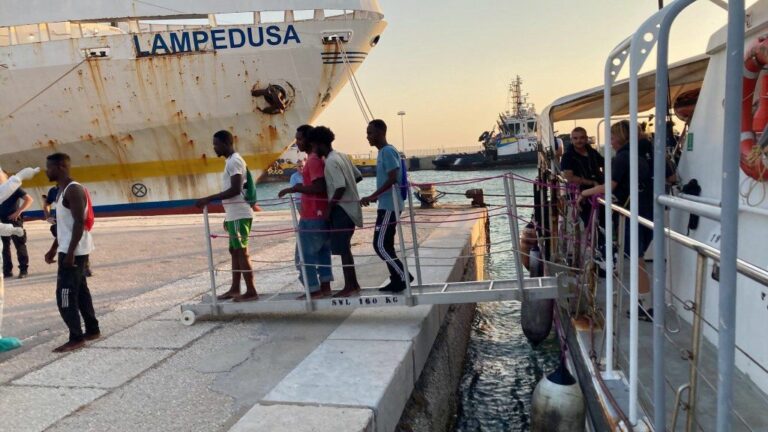
The crackdown came against the backdrop of Sfax’s coasts becoming a significant departure point for illegal migrants attempting to reach the Italian island of Lampedusa.
Situated 80 km from the Tunisian coastline, the island of Lampedusa is often the first stop chosen by migrants for their sea voyage toward Italy.

– Foto: Agenzia Fotogramma –

(ITALPRESS).

Malta plans to ban cigarette sales to people born after a certain date

LA VALLETTA (MALTA) (ITALPRESS/MNA) – The Maltese government is proposing discussions to ban cigarette sales to people born after a certain date, effectively creating the first smoke-free generation. The measure was proposed in a public consultation document issued by the Social Policy and Children’s Rights Ministry. It is among 198 measures proposed as part of the government’s vision to improve child well-being for the next six years. The document does not go into further detail about the proposal. If it enters into force, the ban would essentially begin the eradication of tobacco smoking. However, the doctors’ association said that a proposed ban on tobacco and banning cigarettes for people born after a certain year, only makes sense if the government also plans to ban cannabis smoking. “We have a government actively promoting cannabis and this is extremely contradictory,” said Martin Balzan, a respiratory physician who heads the Malta Medical Association. The UK government will introduce a “historic” new law that will ban cigarette sales to those born on or after January 1, 2009. It described the move as “the most significant public health intervention in a generation, saving tens of thousands of lives and saving the National Health Service billions of pounds”. The UK followed in New Zealand’s decision, which introduced a very similar anti-smoking bill last year – as part of the government’s wider effort to make the country smoke free by 2025.
– Photo: Agenzia Fotogramma –
(ITALPRESS).

Protected Marine Areas and Artisan Fishing, seminar in Palermo

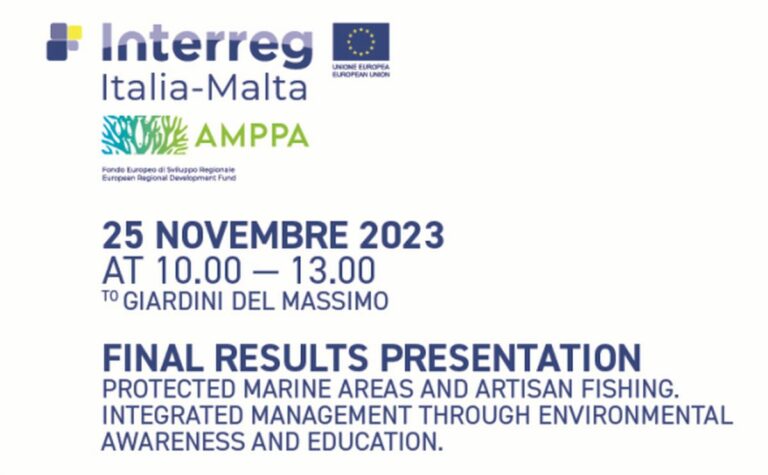
PALERMO (ITALPRESS/MNA) – The seminar which will focus on the presentation of the results of the cross-border project “AMPPA – Protected Marine Areas and Artisan Fishing” will take place on Saturday 25 November 2023 at 10.00 am, at Giardini Del Massimo, in Piazza Giuseppe Verdi in Palermo.
Integrated management through environmental awareness and education” involved three marine protected areas (Egadi, Ustica, Gozo), four Sicilian and Maltese municipalities, the Sicilian Region (Fisheries Department) and the Maltese Government and the ERA (Environment and Resources Authority ).
The initiatives with precise objectives consisted of transnational cooperation including conserving marine biodiversity, maintaining the productivity of ecosystems and contributing to the economic and social well-being within the communities.
The results of a series of activities carried out during the entire project period will be presented in the presence of the Italian and Maltese partners and authorities. The events included environmental information and awareness campaigns, workshops and educational courses, experimental fishing campaigns, courses for diversification of fishing activities, amongst others.
Meanwhile, further actions were taken, including the set-up of four environmental information centres; three in Favignana, Ustica and Ghajnsielem and another one which will be virtual.
Furthermore, a common regulation for the implementation of the MPA has been structured, for the management of small-scale professional fishing activities to safeguard the local environmental and cultural heritage.
The AMPPA project is an initiative financed under the INTERREG V-A Italy-Malta Program with priority axis: III (protection of the environment and promotion of efficient use of resources); specific objective: 3.1 (Contribute to halting the loss of terrestrial and marine biodiversity in the area by maintaining and restoring ecosystems and protected areas). Lead partner: Municipality of Favignana – Managing body of the “Egadi Islands” Marine Protected Area; partners: Regional Department of Mediterranean Fisheries; Municipality of Ustica – Managing body of the Marine Protected Area of the Island of Ustica; Gharb Local Council; Ghajnsielem Local Council.
-photo AMPPA-
(ITALPRESS).

Malta urged to end its energy subsidies

LA VALLETTA (ITALPRESS/MNA) – The European Commission has asked Malta to end its energy support measures to reduce its government deficit, and instead it is recommending the Maltese government means-tested support measures for energy price increases.
A Commission Opinion on Maltàs Draft Budgetary Plan warned that, as a result of hefty energy support measures, Malta has no related savings to be used to reduce the government deficit.
The EU Commission explained that the Draft Budgetary Plan of Malta is not fully in line with the Council Recommendation of 14 July 2023. The report declares: “the Commission invites Malta to wind down the energy support measures as soon as possible in 2023 and 2024”.
The previous council recommendation, published in May this year, had recommended that the Maltese government should wind down its energy support measures by the end of 2023, and to use the related savings to reduce the government deficit.
In case an increased energy prices necessitate fiscal support measures, the Council instead suggested using targeted measures to protect vulnerable households and firms.
The Commission’s 2023 Autumn Forecast predicted that Maltàs net budgetary cost of energy support measures at 1.6% of GDP in 2023. This will increase to 2% in 2024 and 1% the year after.
Budgetary projections have indicated that the government will spend around 320 million in fuel subsidies every year until at least 2026, or until Malta fixes its electricity supply.
Maltese Finance Minister Clyde Caruana has committed to maintaining the fuel subsidies until necessary to keep energy prices stable.
– photo Agenzia Fotogramma-
(ITALPRESS).

Migration, Tajani “The agreement with Albania does not violate EU law”

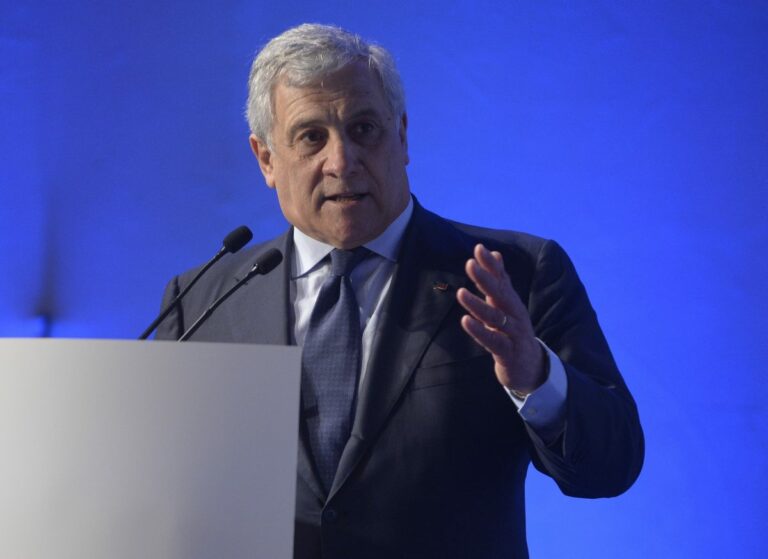
ROME (ITALPRESS/MNA) – The agreement signed two weeks ago by the Italian Prime Minister Giorgia Meloni and the Albanian Prime Minister Edi Rama “is significant within the overall strategy of the government, considering the international context of growing instability which risks increasing migratory flows and the ruthless traffickers’ business, a business that continues to make profit from desperation and claim victims, as demonstrated by what occurred yesterday off the coast of Lampedusa”. This was stated by Deputy Prime Minister and Foreign Minister Antonio Tajani during a briefing in parliament.

“Migrants”, Tajani recalled, “will have exactly the same treatment as provided by the Italian and European regulations. The treatment will be the same as those provided for in Italy by the European Union and will be guaranteed as provided by the Italian jurisdiction. The right to health and protection are fully secured while lawyers and international organizations will be able to enter the centre”.

He added, “there are those in the opposition who feared a violation of international and European law, who described the project with an Italian-style Guantanamo, which spoke about deportations and evoked the precedent of the agreement between the United Kingdom and Rwanda. Faced with these gloomy scenarios, it would be enough to mention the simple observation of the European commissioner for internal affairs, Ylva Johansson, an important exponent of Swedish social democracy, which I will quote: “The EU law is not applicable outside the territory of the European Union, but we know that Italian law follows EU law and that, according to the Agreement, Italian law will apply in Albania”. The Protocol between Italy and Albania therefore, concluded Johansson, does not violate the EU law. The German Chancellor went even further: “Albania will soon be a member of the European Union and we are therefore talking about how to solve challenges and problems in the European family together”, commented Scholz at the congress of European socialists in Malaga. And he added, verbatim: “Irregular migration must be reduced and there will be close collaboration with countries outside the European Union, as it is happening now for example with Turkey, and there could be others. The Protocol between Italy and Albania? We will follow it carefully” declared the Chancellor”.
For Tajani, “in this sense, it is useful to note that this Protocol cannot be compared to the Agreement between the United Kingdom and Rwanda. There is no outsourcing to a third country in the management of asylum applications and there is no derogation on guaranteed international rights, which are, indeed, expressly reaffirmed several times in the Protocol. Soon Albania will join the European Union and it is a member of the Council of Europe. Exceptions would have been impossible”.

– Photo Agenzia Fotogramma –

(ITALPRESS).